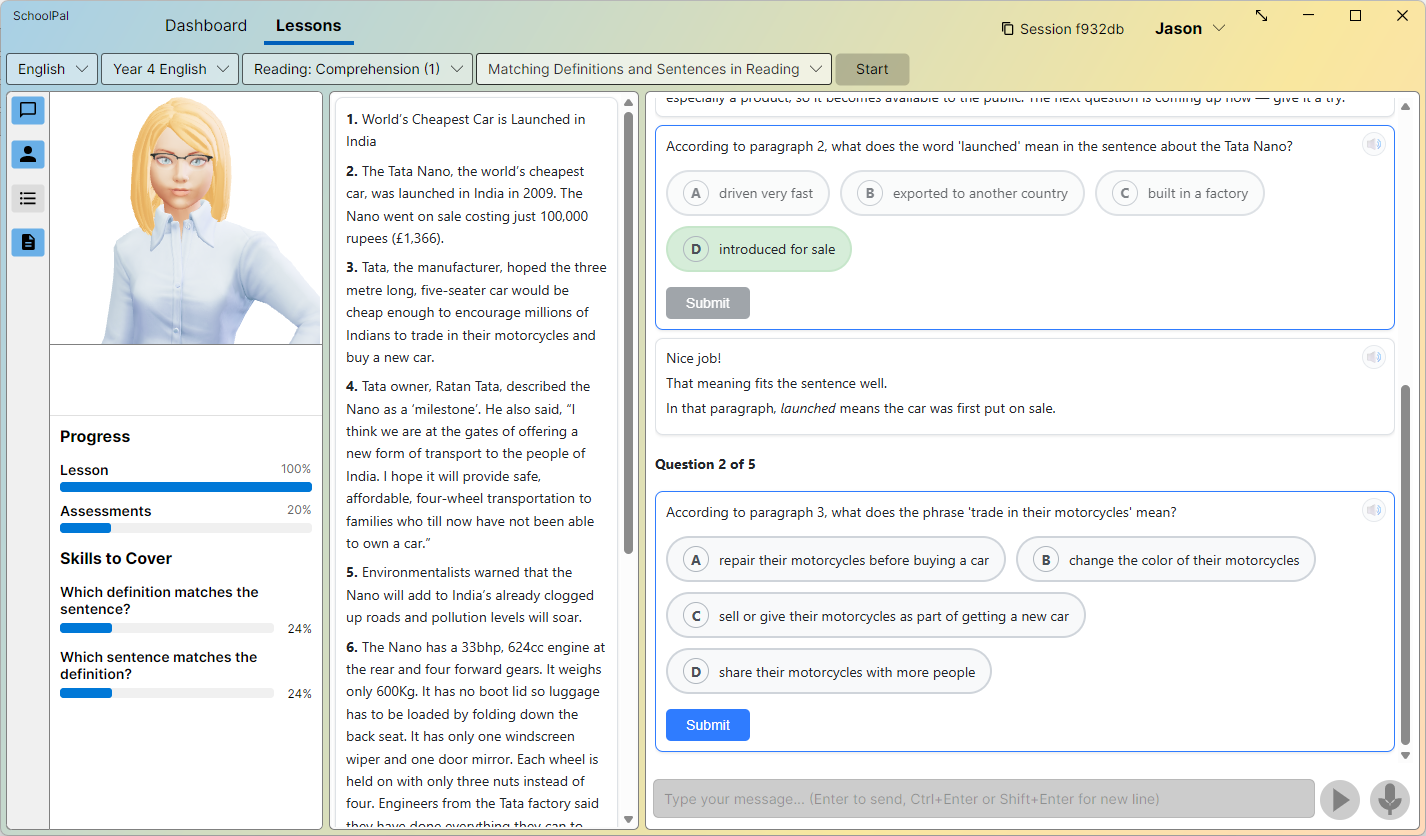
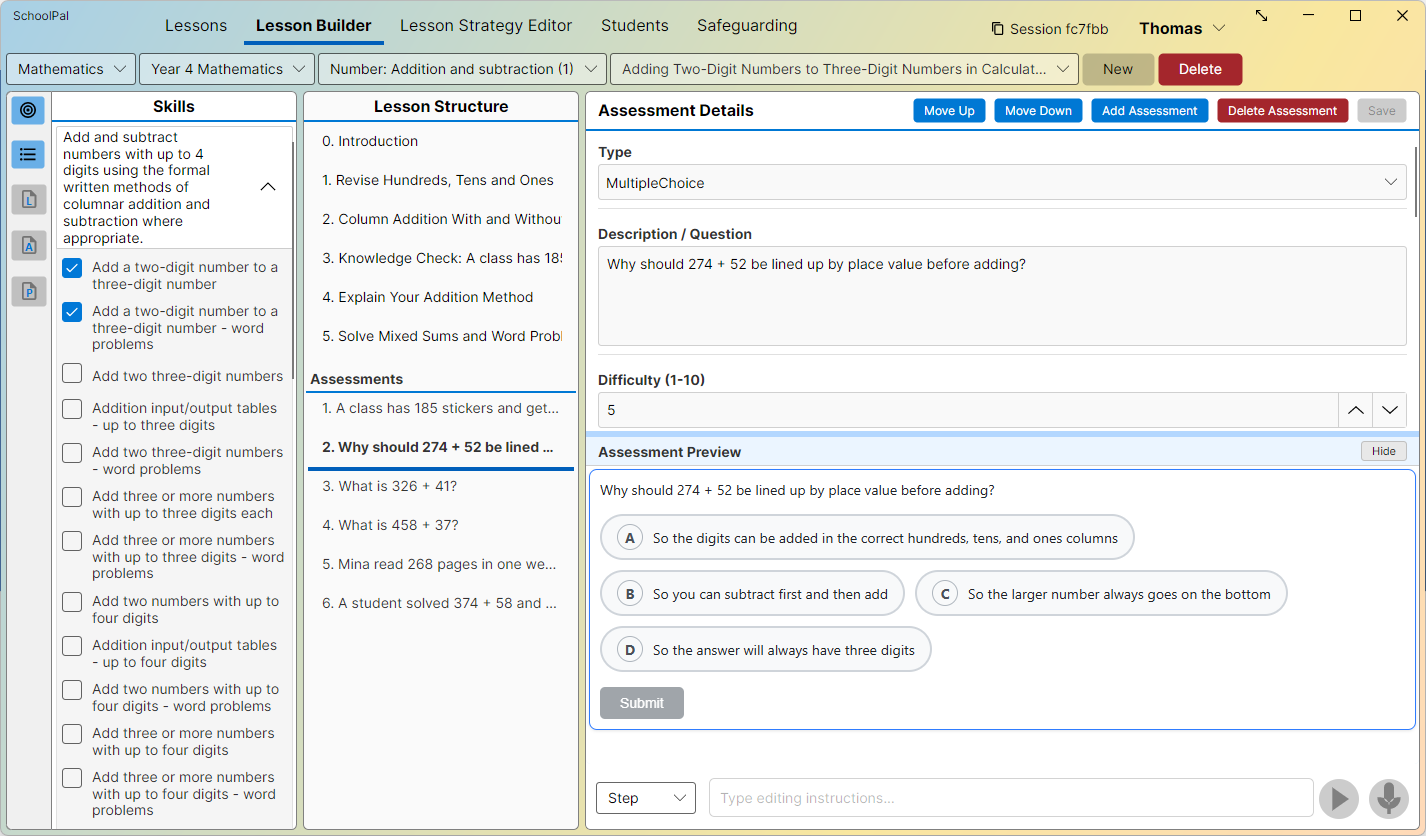
In a busy classroom, one teacher looks after thirty children at once — and every one of them arrives with a different pace, different prior knowledge, and a different level of support they need to thrive. Decades of education research point to the same answer: children learn best with a patient tutor at their side, working one to one. The trouble is that a personal tutor has always been expensive and hard to come by, so the children who would gain the most often go without.
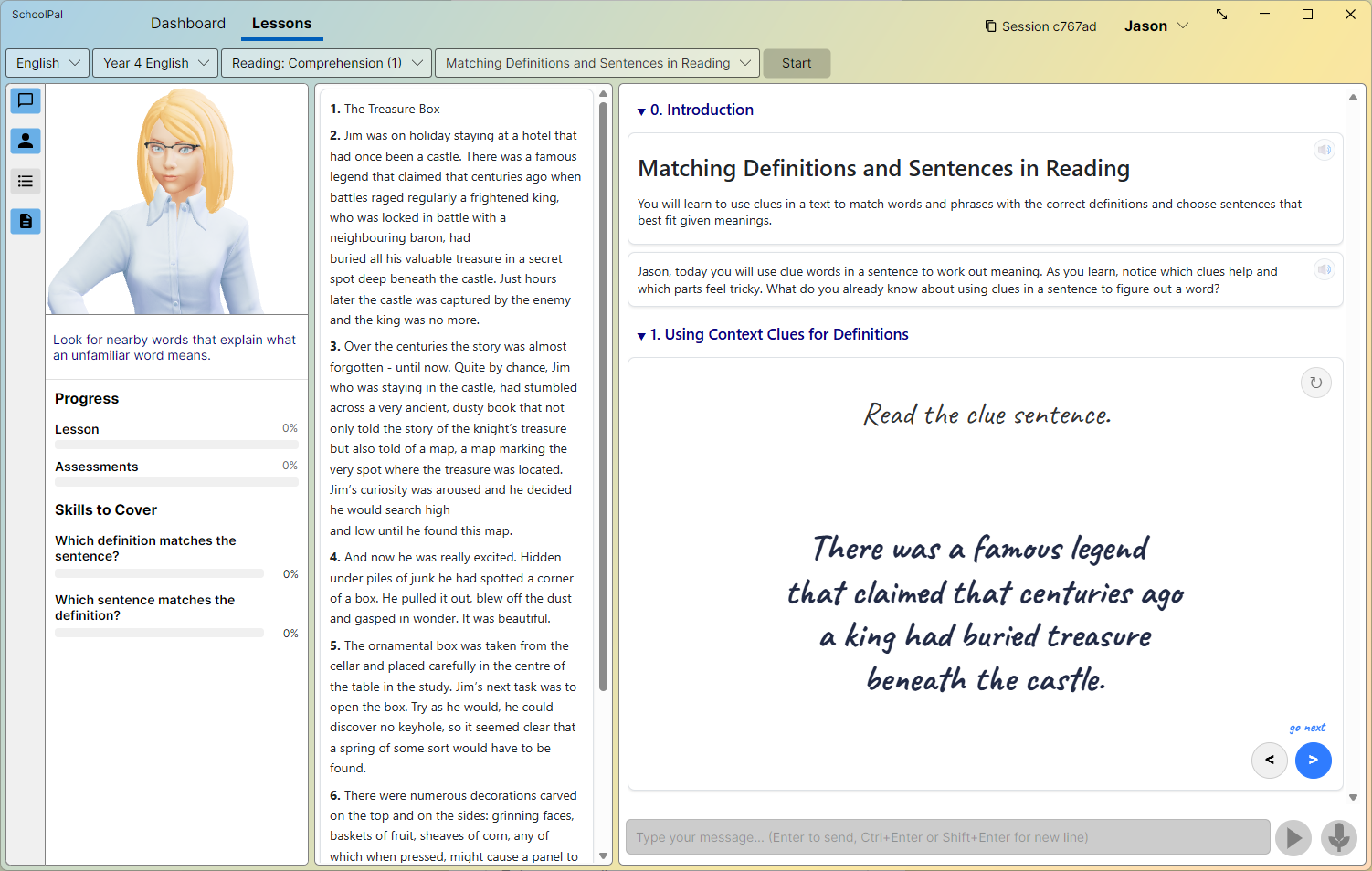
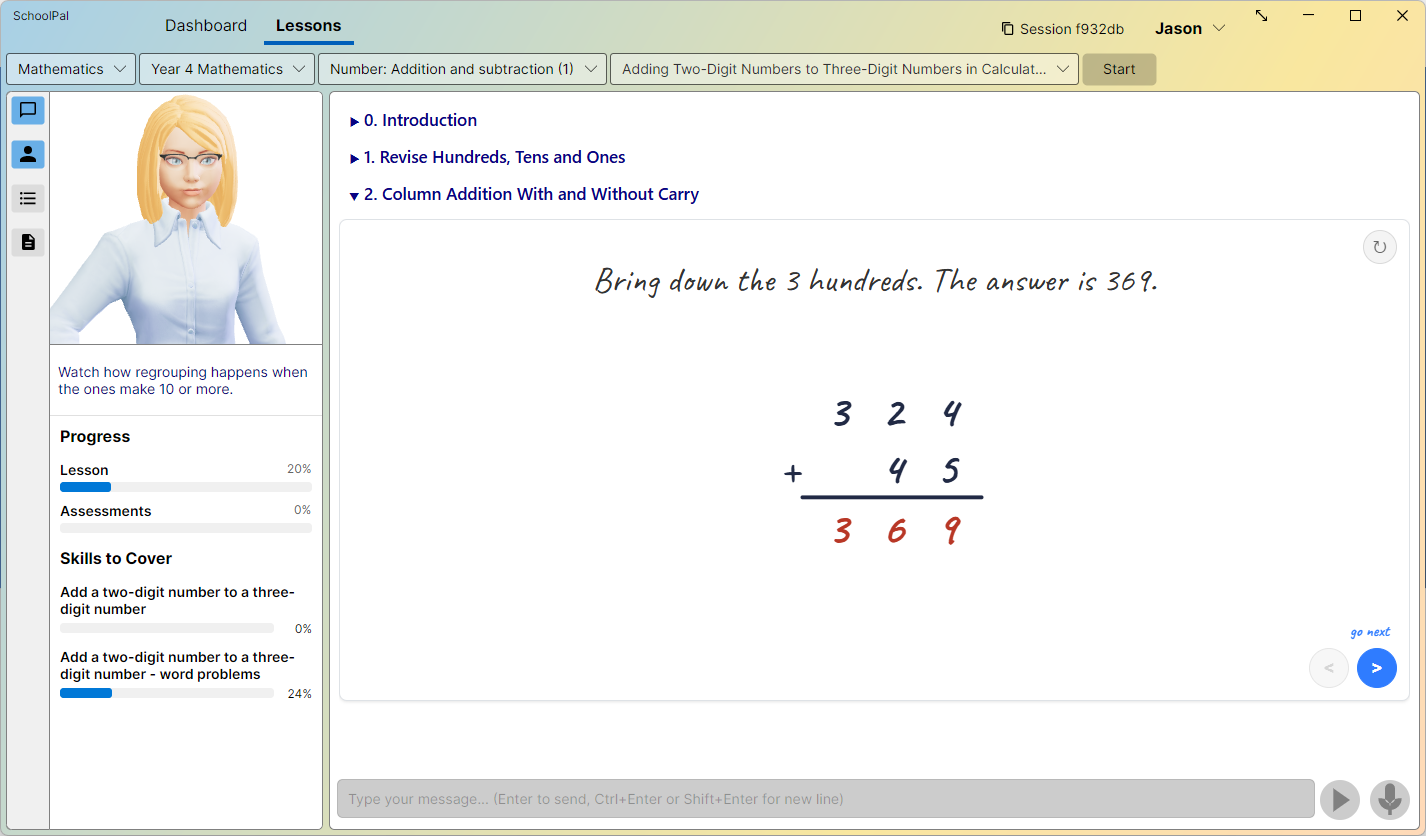
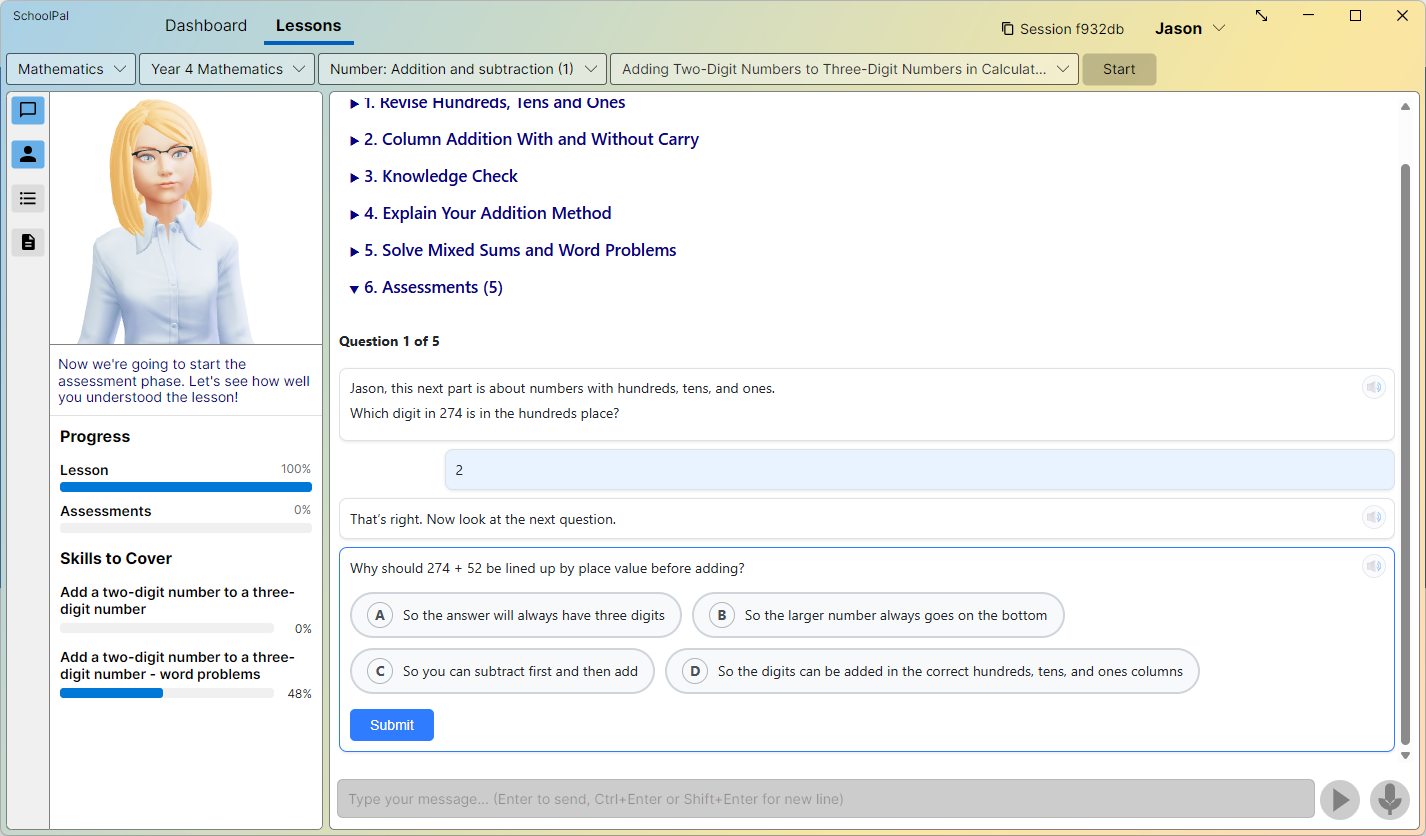
That gap is widest for children who learn differently. Pupils with ADHD, attention difficulties or working-memory challenges aren’t short on ability; they simply don’t fit a one-size-fits-all lesson built for the middle of the room. When the pace is wrong and the support is thin, bright, capable children can be left feeling that learning isn’t for them. SchoolPal was made for exactly these children — and for every child who deserves a lesson that adapts to them rather than the other way round.
2σ
One-to-one tutoring lifts learning by around two standard deviations over the classroom average — Bloom’s “2 Sigma” finding (1984).
5–7%
School-age children worldwide have ADHD (Polanczyk et al., 2007) — among the learners SchoolPal is built to include.
Research-led
Research finds well-designed intelligent tutoring can approach the effectiveness of a one-to-one human tutor (Kulik & Fletcher, 2016) — the standard SchoolPal is designed to reach for.